
Branding
●
●
10 min
Why Maldives Resort and Guesthouse Branding Are Two Completely Different Problems
The Maldives has two entirely different tourism economies and most resort and guesthouse logos are getting both of them wrong. Here is what separates the ones that convert from everything else.
In 2009, the Maldives government made a decision that quietly split the country's tourism industry in two.
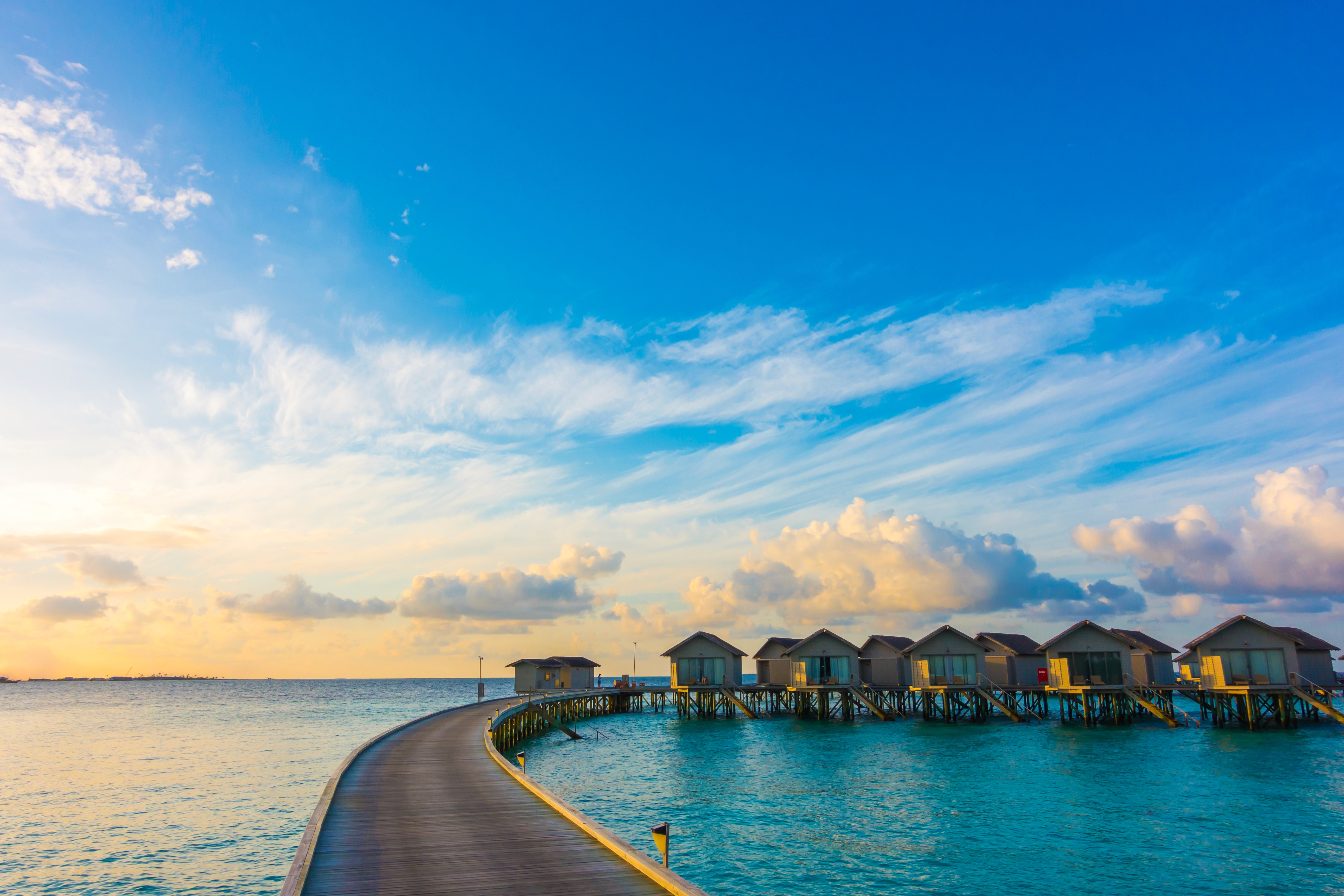
Before that year, tourism in the Maldives operated on a single model: one island, one resort,. The famous isolation that made the destination feel exclusive was not accidental it was policy. Resorts occupied their own private islands, and the local population remained entirely separate from the visitor economy.
Then the government opened local islands to tourism, a policy shift that fundamentally restructured the entire visitor economy. Guesthouses emerged. A second market was born one built not on engineered exclusivity but on authentic proximity to Maldivian life, local food, community diving schools, and accommodation that cost a fraction of the resort price. Branding in the Maldives hospitality industry from luxury Maldives resort branding to local guesthouse branding Maldives requires fundamentally different strategies — the same way brand strategy for hospitality businesses across India and the UAE demands market-specific thinking.. Today, that guesthouse economy is one of the fastest-growing segments in Maldivian tourism, drawing a generation of travellers who actively seek the kind of experience that no overwater villa can provide.
Year local island guesthouses were permitted splitting the market in two
Per night at ultra-luxury resorts, every brand signal must justify this
Source: Condé Nast Traveler — Maldives resort pricing
Inhabited islands now competing for international guesthouse travellers
The Two-Economy Problem: Why Luxury Resorts and Local Guesthouses Need Fundamentally Different Brand Identities
The single most common mistake in Maldives hospitality branding is treating the two markets as variations of the same thing. They are not. They serve different travellers with different motivations, different price sensitivities, and entirely different expectations of what a Maldivian experience should feel like. Understanding this distinction is the starting point for every visual identity decision.
The luxury resort market is built on a specific promise: complete escape. Guests arriving at an ultra-luxury resort in the Maldives are paying not just for accommodation but for a curated reality one where the water is impossibly clear, the service is anticipatory, and every visual detail reinforces the sense that they have entered somewhere extraordinary. The logo for this kind of property must do significant emotional work before a guest ever sets foot on a seaplane. Every design decision the weight of the typography, the restraint of the colour palette, the precision of the icon if one exists contributes to or undermines that signal.
The guesthouse market operates on an entirely different emotional register. These travellers are not seeking escape from the world. They are seeking entry into a more authentic version of it. The logo for a guesthouse that serves this market should feel warm, approachable, and genuinely rooted in the character of its specific island, not like a corporate agency studied the destination from a distance.
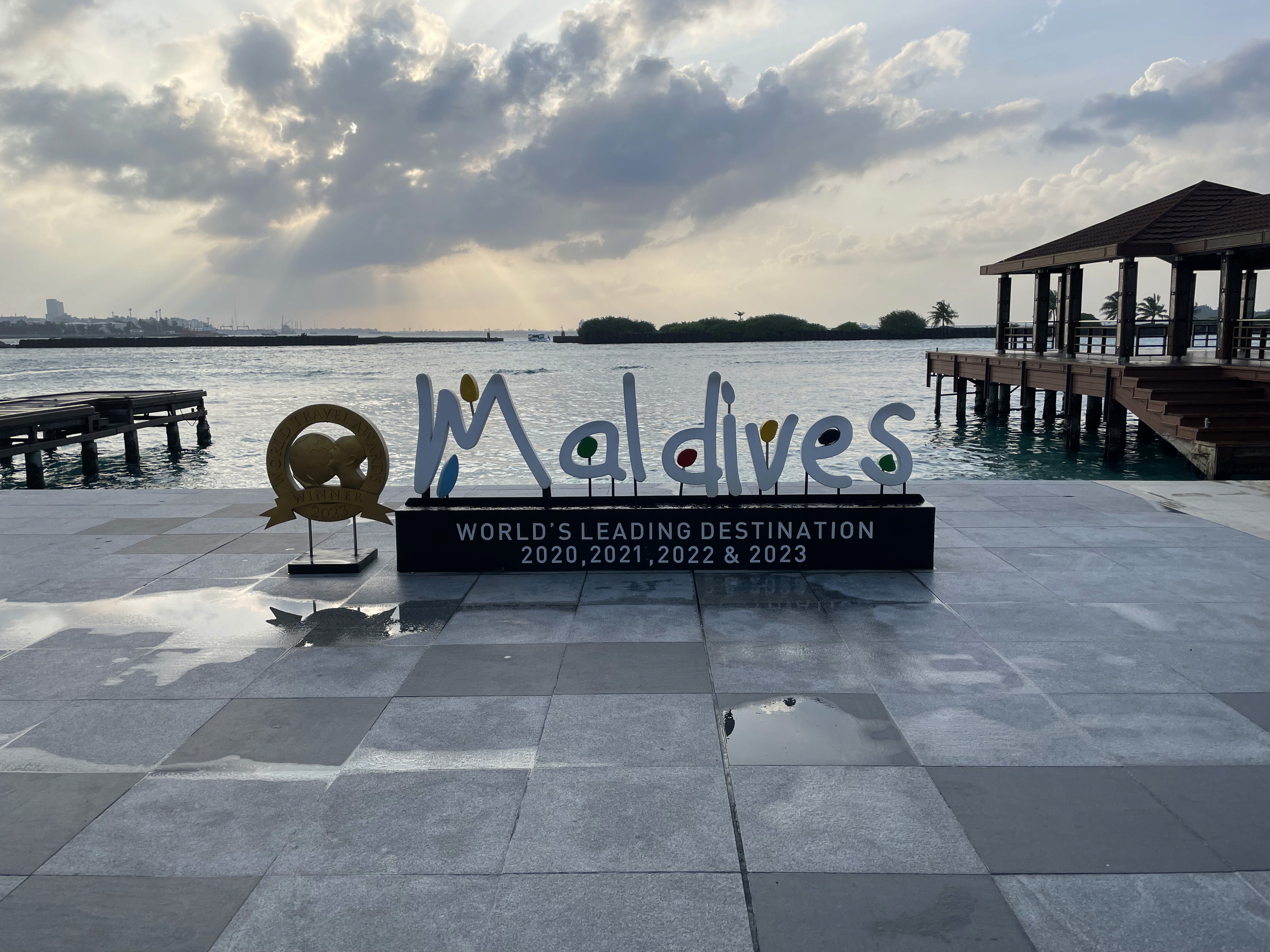
One Destination, Two Brand Worlds: Inside Maldives Tourism Marketing
Maldives Resort Branding: What Luxury Hospitality Logos Actually Require
For properties at the luxury end of the market, the visual brief is deceptively simple. The challenge is not adding enough, it is restraining enough. The logos that perform best for high-end Maldives resort branding share a common characteristic: they do very little, and they do it with complete confidence. A single refined typographic treatment. A minimal icon, if any, that rewards closer inspection with meaning. A colour palette of one or two tones that convey calm and quality without reaching for the obvious blues and greens that saturate the category.
The temptation for resort owners is to encode the destination into the logo to include the ocean, the palm tree, the marine life, the bungalow silhouette. This impulse is understandable but almost always counterproductive. The traveller booking a luxury Maldives resort already knows what the Maldives looks like. What they do not yet know is why this particular property is worth choosing over the forty others at a comparable price point. A logo that simply illustrates the destination adds nothing to that conversation. A logo that communicates the specific character, philosophy, and experience of the property does.
For properties with genuine heritage or cultural story, there is an opportunity to go deeper. The Maldivian Dhoni the traditional wooden boat has genuine visual elegance that, when treated with restraint, can anchor a hotel logo design Maldives in something real and specific rather than generic Tropicalia. The geometric patterns of traditional Maldivian lacquer work, known as liyelaa jehun, carry centuries of craft history. Used with intelligence and care, these references give a luxury resort logo a cultural depth that no stock-derived icon can replicate.
What Guesthouse Branding in the Maldives Actually Requires
The brief for local island guesthouses is, in many ways, more interesting and more difficult to execute well. The visual language of authentic hospitality is harder to manufacture than the visual language of luxury. Luxury can be performed through design conventions that are well understood and widely applied. Authenticity cannot be performed at all it can only be expressed. And when it is faked, travellers who specifically seek genuine experiences notice immediately. It is the same principle that applies when building brand identity for Indian start-ups — the market always recognises when an identity has been manufactured rather than earned.
The best guesthouse branding Maldives properties have built starts with specificity. Not "a guesthouse in the Maldives" but this guesthouse, on this island, run by this family, shaped by these particular values and this particular history. With over 200 inhabited islands across 26 atolls, each with a distinct community and character, the opportunity for specificity is significant. The island of Maafushi has a completely different character from Thinadhoo or Fuvahmulah. A guesthouse on each of those islands should feel like it belongs there, which means the visual identity should draw from something specific and local rather than from a generic template of tropical hospitality.
"From the first call, LogoClub99 understood our vision, shaped it beautifully, and brought it to life beyond expectations. We couldn't be happier with the result."
J.P. Roy
CEO, Spacecollectiv
The Visual Mistakes That Are Costing Maldives Tourism Businesses Bookings
Across both market segments, certain branding mistakes appear with enough regularity that they have become identifiable patterns and each one represents a missed opportunity to differentiate and convert.
What Is Silently Costing Maldives Brands Bookings
Why the Maldives Rewards Brands That Understand the Market They Are Actually In
The properties that build lasting booking momentum in the Maldives are not always the most beautiful or the most expensive. They are the ones whose identity communicates the right thing to the right traveller before that traveller has read a single line of copy. A luxury resort that signals exclusivity before the price is revealed. A guesthouse that feels like it belongs to its island before the guest has even searched for it. That is not a design achievement. That is a strategic one.
The two-economy reality of Maldivian tourism is not going to simplify. The guesthouse market will continue growing. The luxury tier will continue raising expectations. The gap between brands that understand which market they are serving and build their identity accordingly — and those that apply generic tropical conventions to both will only widen.
What a Maldives Hospitality Brand Looks Like When It Is Built Correctly
It does not look like the Maldives. That is the counterintuitive truth at the centre of every effective hospitality identity in this market. The destination is already doing the work of communicating turquoise water and white sand. Your brand's job is to communicate why your specific property your service philosophy, your location, your story is the one worth choosing. The brands that do this well are specific where their competitors are generic, restrained where their competitors are busy, and rooted where their competitors are decorative.
Whether your property is a private island resort justifying a $2,000 per night price point or a family-run guesthouse on a local island offering something no resort can replicate the strategic foundation is the same. Know exactly who you are for. Build every visual decision around that clarity. And let the Maldives itself handle the rest.
"We created LogoClub99 to provide startups with the level of strategic branding usually reserved for enterprise-level corporations.

Your logo is not a decoration. It is a promise. Make sure it is one you can keep.
Whether you operate a luxury resort or a local island guesthouse, effective Maldives resort branding determines whether travellers choose your property or scroll past it to another. The brands that win here are not the ones with the most attractive logo — they are the ones with the most honest one.